
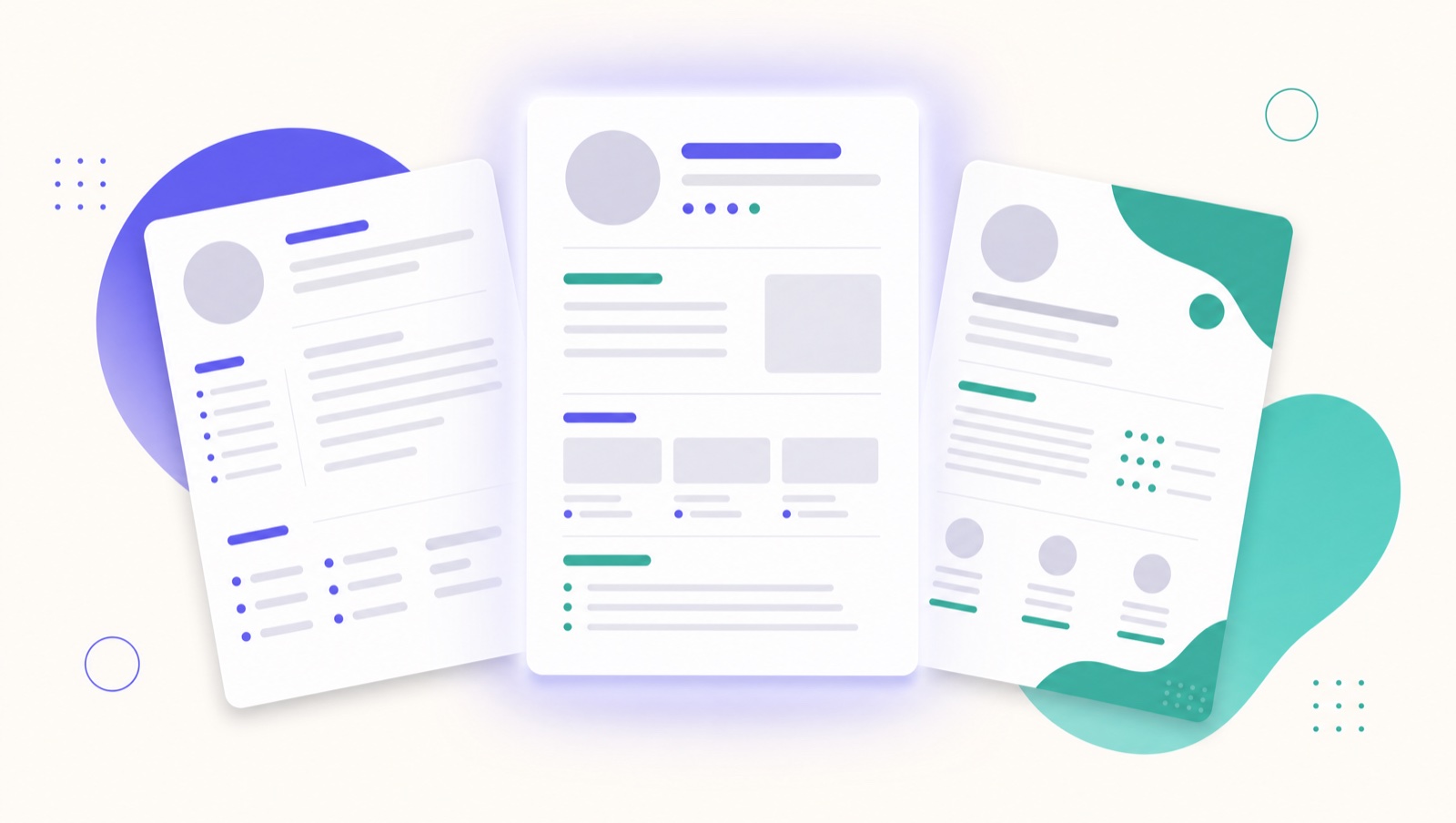
El mejor formato de currículum en 2026 (y cuál debes evitar)
El "mejor" formato de currículum es el que un software puede leer sin problemas y un reclutador puede escanear en segundos. En 2026, eso significa casi siempre un diseño limpio en orden cronológico inverso. Aquí te explicamos cómo se comparan los formatos y qué debes evitar.
Los tres formatos
Cronológico inverso: lista tus puestos del más reciente al más antiguo. Es lo que los reclutadores esperan, lo que los sistemas de seguimiento de candidatos (ATS) procesan con mayor fiabilidad y la opción correcta para la gran mayoría de las personas.
Funcional (habilidades primero, fechas ocultas): se usa a menudo para disimular huecos laborales o cambios de carrera — y los reclutadores lo saben. Suele despertar sospechas y los sistemas lo leen mal. Evítalo.
Híbrido: abre con una sección breve de habilidades o resumen y luego presenta la trayectoria completa en orden cronológico inverso. Buena opción si estás cambiando de carrera y quieres destacar tus habilidades relevantes sin ocultar tu línea de tiempo.
Veredicto: cronológico inverso para la mayoría; híbrido si estás dando un giro profesional.
La estructura que funciona
- Encabezado: nombre, una línea con datos de contacto y enlaces (LinkedIn, portafolio).
- Resumen: una o dos líneas, adaptadas al puesto.
- Experiencia: de lo más reciente a lo más antiguo, con viñetas de logros.
- Habilidades: competencias técnicas y herramientas relevantes.
- Educación y certificaciones.
Detalles de diseño que rompen los sistemas sin que lo notes
- Varias columnas. El texto puede leerse en desorden o mezclarse. Usa una sola columna.
- Tablas y cuadros de texto. El contenido dentro de ellos suele omitirse.
- Información clave en encabezados o pies de página. Algunos sistemas los ignoran — mantén tus datos de contacto en el cuerpo del documento.
- Imágenes e íconos con significado. Una habilidad mostrada solo como gráfico es invisible para el ATS.
- Fuentes poco comunes. Quédate con tipografías estándar de 10–12 pt.
Tipo de archivo y nombre
Envía un PDF con texto seleccionable, salvo que el formulario indique otra cosa (algunos sistemas antiguos prefieren .docx). Y nombra el archivo como un profesional: Jordan-Lee-Resume.pdf, no cv-final-v3.pdf.
Extensión y espacios en blanco
Una página al inicio de tu carrera, dos páginas con más experiencia. Deja márgenes y espacios en blanco generosos — un currículum apretado es difícil de leer tanto para el software como para las personas. (Lee: ¿Cuánto debe medir un currículum?)
En resumen
Un currículum en orden cronológico inverso, a una sola columna, con una fuente estándar y guardado como PDF de texto siempre superará a una plantilla preciosa de varias columnas que ningún sistema puede leer. Guarda el despliegue visual para tu portafolio. Para la lista completa, consulta cómo hacer un currículum que supere el ATS.
Qlivik construye tu currículum en un formato compatible con ATS por defecto, para que nunca tengas que dudar del diseño.