
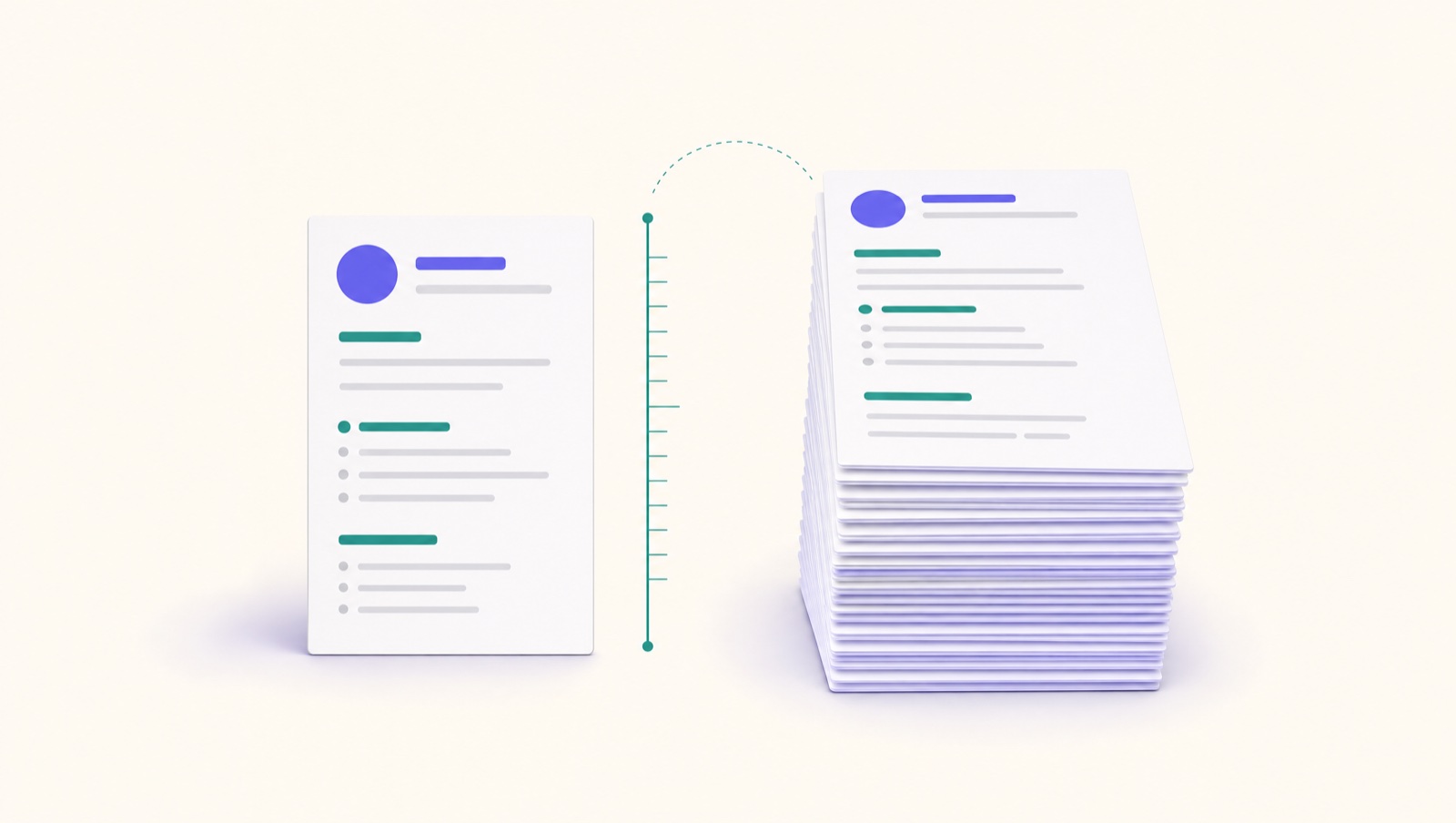
How Long Should a Resume Be? The Honest Answer
"Should my resume be one page or two?" The honest answer: as long as it needs to be to make your case — and not a line longer. Length is a symptom; relevance is the real rule. Here's how to decide.
The general guideline
- One page for students, new grads, and roughly the first 7–10 years of a career.
- Two pages once you have enough relevant experience to fill them with substance.
- Three pages only for senior, academic, or technical CVs where depth is expected.
A two-page resume that earns both pages beats a one-page resume crammed to the margins — and a padded two-pager loses to a tight single page.
Why shorter usually wins
Recruiters skim. The faster they can see you're a fit, the better. Every weak bullet dilutes your strong ones. Cutting isn't losing information — it's concentrating impact.
What to cut first
- Roles older than ~10–15 years, unless directly relevant.
- Responsibilities every candidate shares ("answered emails").
- Outdated tools and skills no longer used in your field.
- A long objective statement — replace it with a one-line summary.
- "References available on request" — assumed, and a waste of space.
What to keep and expand
- Achievements with real, verifiable results.
- Skills and tools named in the job description that you actually have.
- Recent, relevant roles — give these the most space.
Let the role set the length
Tailoring naturally controls length: when you cut everything irrelevant to this job, the right length appears on its own. A focused application is almost always shorter than the everything-you've-ever-done version. (See How to tailor your resume to a job description.)
The test
Read your resume and ask of every line: does this help me get this specific job? If not, cut it. What remains is exactly as long as it should be.
Qlivik tailors and trims your resume per role automatically, so length takes care of itself.